Can VR Heal You Now?

Caleb Ryan
| 02-04-2026
 · News team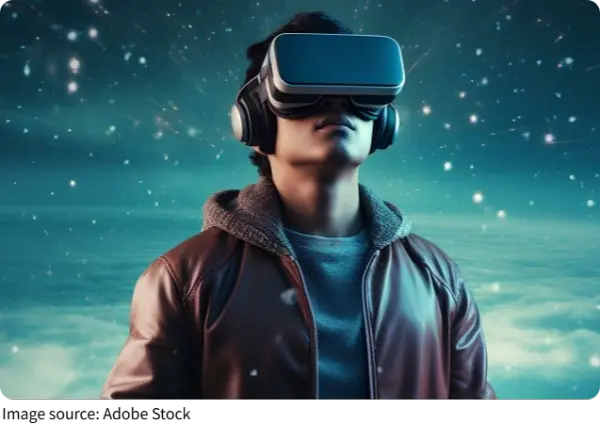
Technological innovation continues to reshape modern healthcare, introducing new methods to enhance treatment outcomes and patient experiences.
Among these advancements, virtual reality (VR) has emerged as a transformative tool with significant therapeutic potential. Originally developed for entertainment and simulation, VR is now being integrated into clinical environments to support pain management, psychological therapy, rehabilitation, and medical training.
Virtual Reality in Clinical Contexts
Virtual Reality refers to computer-generated environments that simulate real or imagined scenarios, allowing users to interact with three-dimensional spaces through specialized devices such as head-mounted displays. In healthcare settings, VR systems are designed with therapeutic objectives, often incorporating guided experiences, sensory engagement, and real-time feedback.
Not all water is equal! 5 easy tips to make sure what you drink is truly healthy!
These tiny DNA marks can reshape cells—how methylation links to cancer may surprise!
Discover What Affects Your Concentration and How to Improve It
Discover the best ways to pair sunglasses with any outfit for a perfect look.
Discover how books transform your thinking, emotions, and perspective on life
Tracing Skateboarding’s Journey from Rebellion to Olympic Recognition
Unlike traditional media, VR provides a sense of presence, meaning users feel as though they are physically situated within the simulated environment. This immersive quality is essential for therapeutic effectiveness, as it allows the brain to respond to virtual stimuli in ways similar to real-world experiences.
Pain Management Through Immersive Distraction
One of the most extensively studied applications of VR in healthcare involves pain modulation. Immersive environments can redirect attention away from discomfort, reducing perceived intensity. This technique, often described as cognitive distraction, leverages the brain’s limited capacity for processing sensory input.
Clinical studies have demonstrated that VR experiences, such as exploring calming landscapes or engaging in interactive tasks, can significantly reduce pain perception during medical procedures. This approach is particularly valuable in settings where pharmacological interventions may have limitations or side effects. By altering sensory focus, VR provides a non-invasive complement to traditional pain management strategies.
Applications in Mental Health Treatment
VR has gained considerable attention in the field of mental health, particularly in therapies addressing anxiety-related conditions. Exposure therapy, a widely used psychological treatment, involves gradual and controlled exposure to feared stimuli. VR enhances this process by allowing clinicians to recreate scenarios with precision and safety.
For example, individuals experiencing Post-Traumatic Stress Disorder can be guided through virtual environments that simulate triggering situations in a controlled manner. This method enables gradual desensitization while maintaining a secure therapeutic setting. Additionally, VR-based relaxation programs can support stress reduction by immersing users in calming environments that promote emotional regulation.
Rehabilitation and Motor Recovery
Beyond psychological applications, VR plays a growing role in physical rehabilitation. Interactive simulations encourage movement, coordination, and engagement, which are essential for recovery. Patients undergoing rehabilitation often benefit from gamified exercises that increase motivation and adherence.
VR systems can track motion and provide immediate feedback, helping refine movement patterns and improve functional outcomes. These systems are particularly useful in long-term rehabilitation programs, where maintaining engagement is critical. The adaptability of VR allows exercises to be customized according to individual progress, ensuring a dynamic and responsive therapeutic experience.
Enhancing Medical Training and Education
Medical education has also been transformed by VR technology. Traditional training methods often rely on textbooks, static models, or limited hands-on opportunities. VR introduces immersive simulations that replicate clinical scenarios with high realism, enabling learners to practice decision-making and procedural skills in a risk-free environment.
These simulations can be repeated and adjusted to reflect varying levels of complexity, providing a scalable learning platform. By bridging the gap between theoretical knowledge and practical application, VR enhances competency and confidence among healthcare professionals.
Challenges and Ethical Considerations
Despite its potential, the integration of VR in healthcare is not without challenges. Accessibility remains a concern, as high-quality VR systems can be costly and require technical expertise. Additionally, prolonged use may cause discomfort or disorientation in some individuals, limiting its applicability.
Data privacy is another important consideration, particularly when VR systems collect sensitive health information. Ensuring secure data handling and ethical use is essential for maintaining trust and compliance with healthcare standards. Furthermore, while VR offers promising results, it should not be viewed as a replacement for established treatments. Instead, it serves as a complementary tool that enhances existing therapeutic approaches.
Albert Skip Rizzo, a leader in the field of virtual reality therapy, has highlighted the major impact VR technology can have in clinical settings. He explains that virtual reality makes it possible to create immersive, three‑dimensional environments in which controlled and complex stimuli can be delivered in a systematic way for assessment and therapeutic purposes.
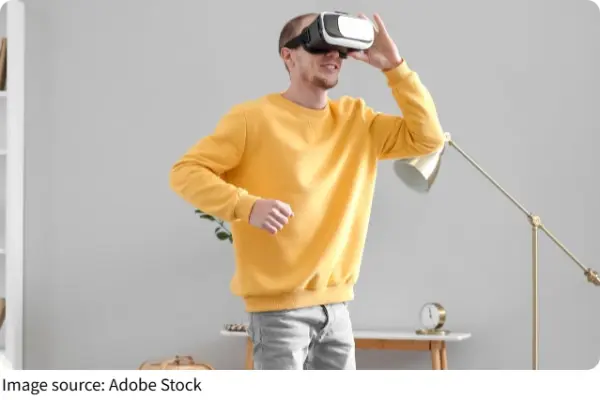
Virtual reality represents a powerful and versatile tool in modern healthcare, offering new possibilities for pain management, mental health treatment, rehabilitation, and medical education. As a complementary technology, VR holds significant promise in enhancing both clinical practice and patient outcomes, marking a new frontier in the evolution of healthcare.