DNA Replication

Ethan Sullivan
| 26-12-2025
 · News team
DNA replication copies the genetic blueprint inside cells with remarkable precision before division.
This process ensures each new cell inherits identical instructions for building proteins and sustaining life.
Enzymes orchestrate the duplication semi-conservatively, pairing old strands with fresh ones seamlessly.
Initiation Phase Details
Special proteins scan for origin sites along the double helix, binding tightly to kickstart unwinding. Helicase enzymes slice hydrogen bonds apart, forming Y-shaped forks that travel bidirectionally. Single-strand binding proteins coat exposed templates, blocking rejoining until copies form.
Topoisomerases relieve twisting ahead of forks by nicking strands temporarily. This setup assembles the machinery in minutes, priming long molecules for action. Eukaryotic cells fire thousands of origins simultaneously for speed.
Shift your habits—will DNA transform too? Shocking body changes await!
Unlock why DNA methylation flips your age clock—younger skin or early wrinkles?
How dollar-cost averaging steadies returns, builds discipline, and simplifies investing when markets swing!
Understand how a balance sheet reveals a business’s assets, debts, and true net worth—your clearest snapshot of financial health!
Homeownership builds wealth—or binds it. Discover when buying boosts your net worth and when it quietly drains your freedom.
The Secret Strategy Parents Use to Fund Grown Kids Without Losing Their Money!
Primer Placement Role
Primase synthesizes short RNA segments complementary to templates, providing starting points since polymerases need a base. Leading strands gain one primer near the origin, while lagging ones require many spaced apart. These 10-nucleotide pieces anchor growth until later removal. Accuracy here sets the tone, as mismatches amplify downstream. Ribonucleotides differ slightly from deoxyribose versions, easing later swaps.
Elongation Dynamics
DNA polymerase III clamps onto primers, adding nucleotides in 5' to 3' lockstep, matching adenine to thymine and guanine to cytosine precisely. Leading strands extend smoothly behind advancing forks. Lagging strands build backward in Okazaki fragments, each 1000-2000 bases long, looping templates for efficiency.
DNA replication - 3D
yourgenome
Leading Strand Efficiency
Continuous synthesis flows with fork movement, polymerase sliding steadily at 1000 bases per second in bacteria. Fork speed matches helicase pace, minimizing gaps. Accessory proteins stabilize the complex, recycling components fluidly. This streamlined path halves effort compared to discontinuous sides.
Lagging Strand Complexity
Fragmented assembly demands coordination; polymerase jumps to new primers after each finish. Loops form temporarily, aligning direction despite opposition. RNase H strips RNA starters, polymerase I fills gaps with DNA. Ligase seals nicks using ATP energy, creating phosphodiester bonds. Thousands of joins per strand complete the puzzle flawlessly.
John F. X. Diffley, Ph.D., an authority on DNA replication initiation at the Francis Crick Institute, emphasizes that uncovering the fundamental mechanisms of how human DNA replication begins and is controlled is essential for understanding how errors in replication can lead to genomic instability and contribute to diseases such as cancer and hereditary disorders.
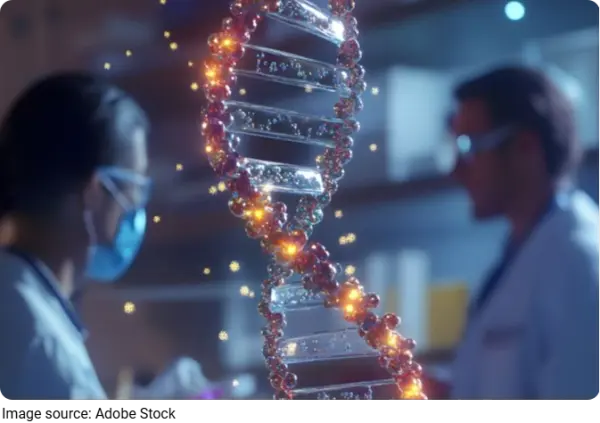
DNA replication masterfully duplicates blueprints through phased enzyme teamwork, blending speed and accuracy. This cornerstone process fuels life's continuity across generations. Mastery of its layers reveals nature's elegant engineering at work.