Money and Inflation

Elena Rossi
| 17-03-2026
 · News team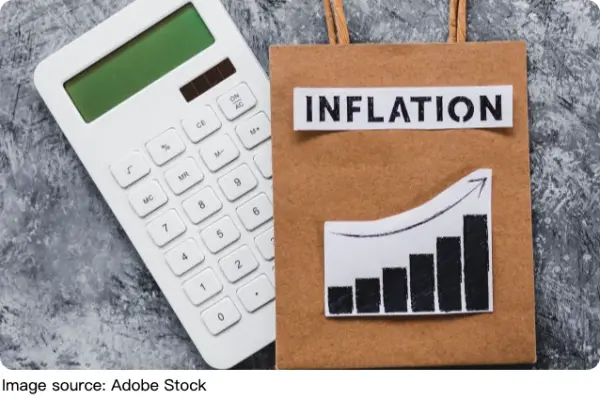
Hello, Lykkers! Have you ever noticed how the same amount of money seems to buy less over time? A grocery trip that once cost $50 might now cost $70 or more. This gradual loss of purchasing power is known as inflation, and it plays a major role in shaping both personal finances and investment strategies.
Understanding inflation can help people make smarter financial decisions and protect the value of their money over the long term.
Inflation refers to the general rise in the prices of goods and services over time. As prices increase, the purchasing power of money decreases. In simple terms, each dollar buys fewer things than it did before. Economists and central banks closely track inflation because it affects economic growth, interest rates, wages, and consumer spending. Most economies aim for moderate inflation, which can signal steady growth. However, when inflation rises too quickly, it can reduce savings and make everyday expenses harder to manage.
The One Outsourcing Rule That Could Save Your Week
This Overlooked Farming Sector Is Turning Heads in the Investment World
The Finance Method That Turns Past Data Into Sharper Investment Decisions
What Summer Heat and Winter Cold Really Mean for Utility Shares
Bitcoin Is Quietly Changing Stock Exchanges in Ways Many Investors Still Miss
Why the Same Product Suddenly Costs More Than Before
One of the clearest effects of inflation is the decline in the real value of money. If income or savings do not grow at the same rate as inflation, money gradually loses purchasing power. For example, imagine keeping $10,000 in cash without earning any interest. If inflation averages 3% per year, that money will slowly lose value in real terms. After several years, it will buy fewer goods and services than when it was first saved. This is why simply holding cash for long periods can weaken the real value of savings.
Inflation also has a major effect on investments. Investors must consider whether their returns are higher than the inflation rate. For example, if an investment earns 6% per year but inflation is 4%, the real return is only about 2%. This means purchasing power grows more slowly than the headline return suggests. Different types of investments react to inflation in different ways. Stocks may benefit when companies raise prices and protect profits over time. Bonds often struggle because the value of future fixed payments declines. Real assets, such as real estate and commodities, sometimes perform better when inflation rises because their prices often increase along with the broader economy.
Warren Buffett, a renowned investor, said that inflation works like a hidden drain on investment returns because investors need stronger gains just to preserve the same purchasing power. He also noted that companies with strong pricing power—businesses that can raise prices without losing customers—are often better positioned during inflationary periods. This shows why investors pay close attention to economic conditions when making long-term investment decisions.
Although inflation cannot be completely avoided, there are ways individuals try to protect their finances. One common approach is investing rather than holding large amounts of cash, since many investments have the potential to grow faster than inflation over time. Diversification is another important strategy. By spreading investments across different asset classes—such as stocks, bonds, and real estate—investors can reduce the risk that inflation will negatively affect their entire portfolio. Long-term investing also matters, because markets have historically grown over extended periods, helping offset the effects of inflation.
Inflation may seem like a complex economic concept, but it directly affects everyday life, from grocery prices to retirement savings. Understanding how inflation works allows people to make better financial decisions and plan more effectively for the future. The next time you notice prices creeping upward, remember that inflation is more than just a headline in financial news. It is a powerful economic force shaping the value of money and the performance of investments around the world.